Bitumen 40-50
Bitumen 40/50 is a relatively hard penetration-grade paving binder with a penetration range of 40–50 dmm at 25°C. Its lower penetration value indicates a firmer consistency than grades such as 60/70 and 80/100, giving the binder characteristics that are particularly valuable in asphalt pavements exposed to high temperatures, heavy wheel loads and repeated traffic stresses.
It is widely used in demanding infrastructure projects, especially in hot-climate markets, where controlling permanent deformation and maintaining pavement stability are important considerations.
Performance Under Heavy Loading
The relatively high consistency of Bitumen 40/50 contributes to the stiffness of the asphalt binder and can improve resistance to rutting and permanent deformation under repeated loading. This makes the grade particularly relevant to pavements exposed to high axle loads, elevated surface temperatures and substantial shear forces.
Bitumen 40/50 is therefore commonly considered for expressways, highways and heavily trafficked arterial roads, particularly where climatic and traffic conditions place greater demands on conventional paving binders.
As with other penetration grades, actual pavement performance depends on the complete asphalt mixture, aggregate characteristics, pavement structure, traffic conditions and climatic environment. Grade selection should consequently be based on the applicable engineering requirements rather than penetration value alone.
High-Load Infrastructure Applications
The harder consistency of 40/50 extends its use beyond conventional road paving. It is frequently considered for asphalt applications where concentrated or repetitive wheel loading requires a stable pavement structure.
Typical applications include:
Airport runways and taxiways, exposed to repeated aircraft wheel loads
Port and container terminal pavements, subject to heavy vehicles and concentrated loading
Industrial yards and logistics areas, where intensive heavy-duty traffic can cause pavement deformation
Expressways and major highways in warm and high-temperature regions
Motor racing circuits, where asphalt surfaces experience repeated loading, elevated temperatures and significant lateral forces
The grade may also be used in selected industrial and specialized applications where a harder bituminous binder is required. Its use in waterproofing membranes and similar products depends on the formulation and technical requirements of the finished material.
Production & Grade Classification
Bitumen 40/50 is manufactured from petroleum-derived feedstocks through controlled refinery processing. The grade is classified through the needle penetration test, which measures the depth of penetration into the binder under standardized conditions, including a temperature of 25°C, a specified load and a defined test period.
With a penetration range of 40–50 dmm, this grade falls within the harder range of conventional penetration-grade paving binders. Its quality is assessed through penetration together with other characteristics such as softening point, ductility, viscosity and temperature-related properties, according to the relevant product standard.
Production conditions and feedstock characteristics can vary between refineries. For this reason, the conformity of a shipment should be established through its laboratory test results and declared specification, rather than by assuming identical characteristics from the grade designation alone.
Markets & International Demand
Bitumen 40/50 has established demand in hot and heavily trafficked markets, particularly across the Middle East, South Asia and selected African countries. 40/50 is particularly prevalent in hot-climate markets and heavy-duty pavement applications.The United Arab Emirates, Kuwait, Oman, India, Pakistan, Nigeria and Ghana are among such destinations particularly for road and infrastructure projects where resistance to rutting and permanent deformation is an important consideration.
Demand and grade preferences vary between countries and individual projects, with local road authorities often specifying the required penetration, viscosity or performance grade according to pavement design and environmental conditions.
Quality Assurance & Shipment Documentation
For each supply contract, the technical requirements are established in accordance with the agreed grade and destination specification. Shipment quality can be documented through a Certificate of Analysis (COA), providing the relevant laboratory results for the cargo.
Where the transaction calls for third-party verification, SGS inspection may be arranged as part of the pre-shipment quality-control process. For regulated destinations, additional conformity procedures such as PVoC and issuance of a Certificate of Conformity (CoC) can be handled when required by local import regulations.
This approach allows the documentation package to be aligned with the actual requirements of the destination rather than applying the same certification procedure to every shipment.
Bitumen 40/50 Supply
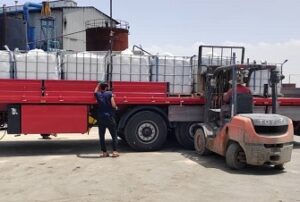
NEXOIL supplies 40/50 binder either in bitumen drums or bulk, for road construction, asphalt production and demanding infrastructure applications in international markets. Supply arrangements are based on the buyer’s grade, quantity, destination, applicable standard, packing requirements and inspection conditions.
Order bitumen 40/50 requirements to receive a quotation together with the relevant technical and export documentation requirements.
| Specification | Test Method | Unit | Min. | Max. |
| Specific Gravity at 25 °C | ASTM D70 | kg/m³ | 1.01 | 1.05 |
| Penetration at 25 °C, 100g, 5s | ASTM D5 | 0.1mm | 40 | 50 |
| Softening Point | ASTM D36 | °C | 52 | 60 |
| Ductility at 25 °C | ASTM D113 | Cm | 100 | – |
| Loss on Heating | ASTM D6 | %WT | – | 0.5 |
| Drop in Penetration after Heating | ASTM D5 | % | – | 20 |
| Flash Point | ASTM D92 | °C | 250 | – |
| Solubility in Trichloroethylene | ASTM D2042 | %WT | 99.5 | – |
| Spot Test | AASHTO T102 | Negative |