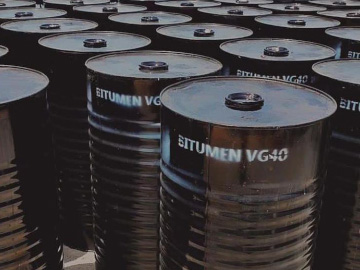
Viscosity Grade Bitumen
VG grade bitumen, produced through vacuum aeration, is assessed based on the viscosity value in 60 ◦C and 135 ◦C and categorized according to two standards; AASHTO or ASTM.
VG10, VG20, VG30, and VG40, are different types of vicosity grade bitumen. As the number becomes more, the bitumen hardness increases.
Some ones point out the viscosity grade as AC based on AASHTO standard which divides viscosity grade into two groups of AC and AR. AC stands for Asphalt cement. Besides AC10, AC20, AC30, and AC40, AC-2.5 and AC-5 are two other grades in this classification, suitable for particular usage in cold regions such as Canada. AC-2.5 has the lowest viscosity among all other types, not suitable for heavy traffic or loads.
Having tested in two different temperatures, the material with higher durability & adhesion, water-proofness, and better performance in bearing traffic loads, might be a wiser choice for both low and high temperatures. this category is one of the most favored choices in India’s market.
Having supplied the most qualitative productions, made by expert technical teams, Nexoil is ready to get your order for all grades of bitumen.
Bitumen (VG10)
Bitumen VG10 is a particular type of viscosity-grade category, commonly used in road construction and various industrial applications. Derived from crude oil via fractional distillation, VG10 is a petroleum-based product. Its relatively low viscosity makes it ideal for use in road construction, especially in colder regions.
VG10, as the softest kind of VG class, is mainly suitable for surface coating or paving in cold climates. Moreover, it is used in the production of emulsions and modified bitumen. its equivalent grade in PEN grade is 80-100. It is commonly utilized for surface dressing in paving and repair works, particularly in cold climates, as an alternative to the 80/100 penetration grade bitumen. VG10 leads to more durable pavements by optimizing mixing and compaction temperatures. Unlike penetration bitumen, VG 10 shows consistent rutting performance in hot weather. The specified minimum kinematic viscosity at 135°C helps avoid tender mixes during construction.Additionally, it is used in the production of emulsions and modified products.
| Specification | Unit | Value | Test Method |
| Absolute Viscosity, at 60 ◦C | Poise | Min 800 | ASTM D4402 |
| Kinematic Viscosity, at 135 ◦C | CST | Min 250 | ASTM D2170 |
| Flash Point | ◦C | Min 220 | ASTM D93 |
| Solubility in Trichloroethylene | %WT | Min 99 | ASTM D2042 |
| Penetration Value, at 25 ◦C | 0.1mm | 80-100 | ASTM D5 |
| Softening Point | ◦C | Min 40 | ASTM D36 |
| Thin-Film Oven Test (TFOT) | |||
| Viscosity Ratio, at 60 ◦C | ◦C | Max 4 | ASTM D4402 |
| Ductility at 25 ◦C | Cm | Min 75 | ASTM D113 |
Bitumen (VG20)
This grade of viscosity grade bitumen, with 1600 to 2400 poise at 60 °C. is generally used in hot mix asphalt for road construction in cold or mountain areas.
In North India, Vg20 is used for road construction in hot mix asphalt.
Nexoil Ltd. guarantees the quality of Bitumen VG-20. An independent international inspection agency verifies both quality and quantity during vessel/container loading. Each production batch is tested by the Quality Control (QC) team to ensure compliance with ASTM specifications. We supply our customers with the material fully conforms to ASTM standards besides Spot Test Negative(AASHTO T102).
| Specification | Unit | Value | Test Method |
| Absolute Viscosity, at 60 ◦C | Poise | Min 1600 | ASTM D4402 |
| Kinematic Viscosity, at 135 ◦C | CST | Min 300 | ASTM D2170 |
| Flash Point | ◦C | Min 220 | ASTM D93 |
| Solubility in Trichloroethylene | %WT | Min 99 | ASTM D2042 |
| Penetration Value, at 25 ◦C | 0.1mm | 60-80 | ASTM D5 |
| Softening Point | ◦C | Min 40 | ASTM D36 |
| Thin-Film Oven Test (TFOT) | |||
| Viscosity Ratio, at 60 ◦C | ◦C | Max 4 | ASTM D4402 |
| Ductility at 25 ◦C | Cm | Min 50 | ASTM D113 |
Bitumen (VG30)
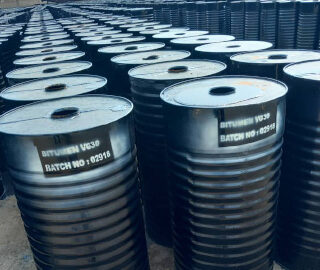
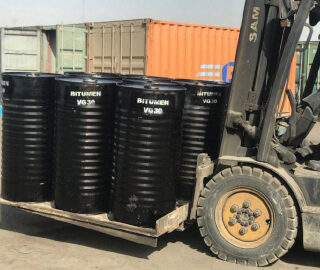
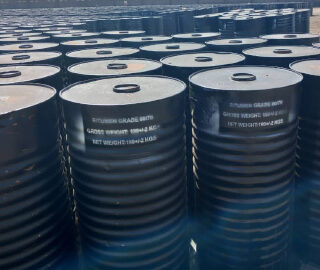
Bitumen VG30 is a medium-viscosity binder formulated for use in pavement structures subjected to moderate to heavy traffic loads. Its Rheroological properties make it well-suited for flexible pavement layers, particularly in dense-graded hot mix asphalt applications for both base and surface courses. The binder’s viscosity is optimized to provide a balance between work-ability during mixing and placement, and mechanical stability against rutting and deformation under load.
VG-30 grade supports a range of asphalt compositions, including both dense-graded and open-graded systems, making it adaptable to multiple paving strategies. It is specified for use in high-volume roadways, urban pavements, structural waterproofing, and other infrastructure exposed to intermediate to heavy traffic conditions. Its cohesive strength and oxidative stability also make it effective for overlay and pavement rehabilitation works. This grade probably is the most applicable grade of bitumen in road construction, insulation, paving, & production of cutback and modified bitumen.
Vg30 is the best choice for heavy traffic, high loads, and hot or damp areas because its high viscosity leads to water and thermal resistance.
If you have any inquiries, please don’t hesitate to contact us.
| Specification | Unit | Value | Test Method |
| Absolute Viscosity, at 60 ◦C | Poise | Min 2400 | ASTM D4402 |
| Kinematic Viscosity, at 135 ◦C | CST | Min 350 | ASTM D2170 |
| Flash Point | ◦C | Min 220 | ASTM D93 |
| Solubility in Trichloroethylene | %WT | Min 99 | ASTM D2042 |
| Penetration Value, at 25 ◦C | 0.1mm | 50-70 | ASTM D5 |
| Softening Point | ◦C | Min 47 | ASTM D36 |
| Thin-Film Oven Test (TFOT) | |||
| Viscosity Ratio, at 60 ◦C | ◦C | Max 4 | ASTM D4402 |
| Ductility at 25 ◦C | Cm | Min 40 | ASTM D113 |
| Specific Gravity, at 25 ◦C | kg/m³ | Min 1.0131 | ASTM D36 |
Bitumen (VG40)
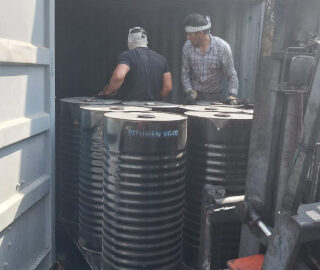
Bitumen VG40 is a high-viscosity grade specifically formulated for applications involving extreme load-bearing and thermal conditions. It is typically employed in the construction of heavy-traffic pavements and critical stress zones. The increased viscosity of VG40 facilitates the development of rigid asphalt mixtures, thereby improving structural stability and resistance to deformation under high temperature and load, as per the specifications outlined below.
VG-40 bitumen is compatible with multiple asphalt mix types and paving techniques, producing cohesive, high-strength mixtures suited for all traffic intensities. It is recommended for heavy-traffic roads, maintenance layers, airport runways, taxiways, and container yards, particularly in regions with temperatures exceeding 40°C and in areas subjected to extreme load stress, such as junctions or structurally loaded sections.
This grade of bitumen with viscosity of 3200-4800 Poise which means this type of bitumen is the key for high temperatures above 40 ◦C and super hard traffic such as conjunctions or segments in construction bearing heavy loads. Occasionally VG40 is the better alternative for 40-50 in penetration grade.


| Specification | Unit | Value | Test Method |
| Absolute Viscosity, at 60 ◦C | Poise | Min 3200 | ASTM D4402 |
| Kinematic Viscosity, at 135 ◦C | CST | Min 400 | ASTM D2170 |
| Flash Point | ◦C | Min 220 | ASTM D93 |
| Solubility in Trichloroethylene | %WT | Min 99 | ASTM D2042 |
| Penetration Value, at 25 ◦C | 0.1mm | 40-60 | ASTM D5 |
| Softening Point | ◦C | Min 25 | ASTM D36 |
| Thin-Film Oven Test (TFOT) | |||
| Viscosity Ratio, at 60 ◦C | ◦C | Max 4 | ASTM D4402 |
| Ductility at 25 ◦C | Cm | Min 25 | ASTM D113 |