Shadows in the Strait: How Blockades, Sea Mines, and the "Ghost Fleet" Have Paralyzed Gulf Shipping
Nexoil Editorial
Executive Summary
A unified analysis of assessments from international maritime intelligence firms, defense organizations, and financial trackers indicates that the Gulf region is experiencing an unprecedented maritime conflict. This escalation has effectively choked off mainstream commercial shipping and severely crippled Iranian exports. The United States’ implementation of a strict naval blockade, paired with an aggressive “Economic D-Day” campaign, has severely impacted Iranian ports. Concurrently, Iran’s enforcement of aggressive transit controls has collapsed standard shipping traffic through the Strait of Hormuz by 80% to 90%, fundamentally altering the geopolitical and commercial landscape of the Middle East.
The Chokepoint Collapse and the “New Normal”
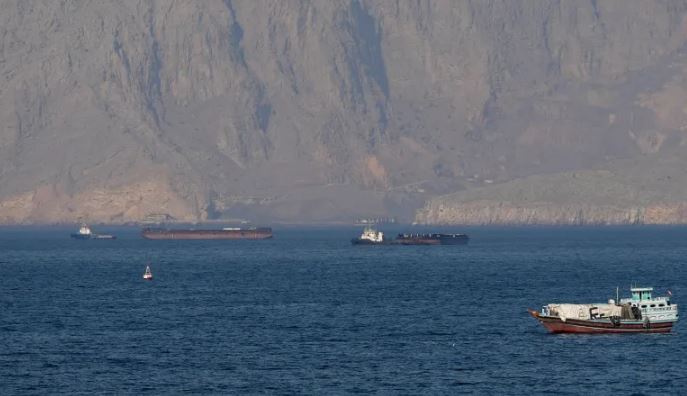
International intelligence reports indicate that the Persian Gulf, Gulf of Oman, and Strait of Hormuz have shifted from highly volatile flashpoints into active, low-intensity combat zones. Daily ship transits through the Strait of Hormuz have plummeted from a pre-war average of 100–138 vessels down to single digits or fewer than 20 per day.
According to maritime tracking data, outbound commercial transits have repeatedly hit zero following projectile strikes, missile exchanges, and threats from regional forces. The prolonged nature of the crisis has prompted neighboring Gulf states to pour billions of dollars into accelerating alternative land pipelines to bypass the Strait entirely, fundamentally threatening Iran’s long-term economic leverage in the waterway.
Supply Chain Paralysis: From Crude to Bitumen
While crude oil dominates global headlines, a total stoppage of Iranian sea shipments has not been fully achieved due to illicit evasion tactics. However, overall exports have been suppressed to historic lows. Iran’s oil exports collapsed from 1.7 million barrels per day (bpd) last year to roughly 260,000 bpd under the pressure of international sanctions.
Iran Oil Export Volume Comparison (August 2025 vs. August 2026)
August 2025──────────────────────────────────────────────────────August 2026: ██████████████████████████████ 1.7 Million bpd August 2026: ████ 260,000 bpd (~85% Reduction)──────────────────────────────────────────────────────────
This suppression is vividly apparent at Iran’s largest commercial container hub—the Shahid Rajaee Port in Bandar Abbas (BND). Verification reveals idle gantry cranes, empty shipping yards, and a striking absence of standard vessel and truck traffic, leaving the port operating at a fraction of its normal capacity. Data from United Against Nuclear Iran (UANI) shows that under the reimposed naval blockade, international coalition forces have actively intercepted, redirected, or boarded dozens of commercial vessels attempting to run the blockade to or from Iranian terminals [UANI].
Beyond crude, Iran’s niche bitumen (asphalt binder) trade has been plunged into structural paralysis. Key Asian markets, particularly India, saw their Iranian bitumen imports halve during the first half of 2026, leaving scores of specialized bitumen tankers stranded. Because bitumen requires specialized, expensive heated-tanker vessels to prevent the cargo from solidifying, ship owners are overwhelmingly refusing to load cargoes from BND. The risk of total asset loss under current conditions simply outweighs the premium payouts. This complete suppression of Iranian supply has forced regional infrastructure buyers to scramble for alternative, far more expensive formula-linked cargoes from South China, driving up global road construction costs.
GPS Deactivation and Electronic Warfare
The phenomenon of vessels sailing with their GPS and Automatic Identification Systems (AIS) turned off is a central pillar of modern sanctions-evasion strategy. Even under blockade, an active “Dark Fleet” network of more than 50 unsanctioned or black-market tankers continues clandestine operations. These vessels load oil from Iranian ports and sail “dark” out of the Gulf to global hubs like Malaysia to conduct covert ship-to-ship (STS) transfers destined for East Asian markets.
However, the issue extends beyond voluntary “dark” sailing. According to reports from maritime engineering bodies, intense Global Navigation Satellite System (GNSS) and GPS jamming clusters have emerged south of Iran, near the UAE and Oman. These electronic warfare tactics are being deployed either by state actors to defend against drone strikes or by rogue vessels emitting high-powered signals to spoof their actual locations. Turning off tracking transponders in an active conflict zone has exponentially raised the risk of collisions. Consequently, maritime insurance premiums have surged to an unsustainable 7.5%–10% of a vessel’s total value, raising the cost of a single crossing to over $10 million.
Kinetic Escalation: Sea Mines and the Strike on Kharg Island
The commercial slowdown is a direct consequence of a dangerous cycle of “guerrilla warfare” involving the deployment of sea mines in the strategic waterway. U.S. Central Command (CENTCOM) executed targeted airstrikes against military installations on Larak Island—overlooking the mouth of the Strait of Hormuz—after intelligence observed forces making covert movements to launch rocket-propelled naval mines into international shipping lanes. Proving the reality of the threat, a commercial supertanker was subsequently struck by two naval mines in the southern Strait of Hormuz, causing it to catch fire and halt completely. Intelligence data indicates that regional forces retain 80% to 90% of their small-boat and minelaying fleet, backed by an underwater arsenal estimated at up to 6,000 naval mines.
Key Military Flash-points in the Gulf Region
Key Military Flashpoints in the Gulf Region
┌─────────────────┐ ┌──────────────────┐ ┌─────────────────┐
│ Larak Island │ ───> │ Strait Waters │ ───> │ Kharg Island │
│ Preemptive │ │ Commercial Tanker │ │ Destructive │
│ Airstrikes on │ │ Struck by Twin │ │ Precision Blitz │
│ Minelayers │ │ Naval Sea Mines │ │Targets Bickers│
└─────────────────┘ └──────────────────┘ └─────────────────┘
This dynamic escalated dramatically following a high-stakes military flash-point at Kharg Island, the crown jewel of Iran’s energy infrastructure which handles 90% of its oil exports. Over 15 massive explosions shook the island during a destructive, multi-hour precision strike campaign. The operation—reportedly launched via international assets stationed in neighboring Gulf states—specifically targeted and destroyed naval mine storage facilities and missile bunkers rather than civilian refinery infrastructure.
A fierce geopolitical information war has broken out regarding the fallout. While western leaders announced via social media that Kharg Island’s export capability had been decisively crippled, the National Iranian Oil Company (NIOC) quickly dismissed the claims as psychological propaganda. Iranian state officials insist that oil and gas operations have not stopped, claiming that contractors are actively working on-site to upgrade and repair storage terminals despite the heavy strikes. In direct counter-retaliation to the Larak and Kharg strikes, ballistic missile and drone swarms were launched targeting western military airbases in Jordan (including the Al Azraq base) and lines near the UAE, pushing the entire region closer to an all-out, multi-state war.
Conclusion and Outlook
The Gulf region has evolved from a traditional sanctions-evasion arena into a high-stakes maritime conflict zone where industrial trade and kinetic military action directly intersect. While a shadow “Ghost Fleet” and specialized bitumen traders continue to use deactivated AIS transponders to leak out minimal revenues, the combination of direct naval blockades, precision strikes on critical hubs like Kharg Island, and localized electronic warfare has functionally paralyzed standard trade routes.
International think tanks and military analysts see two diverging paths for the region’s future:
- Escalation via Regulatory Warfare:The newly designated Persian Gulf Strait Authority (PGSA) has begun blacklisting third-party commercial vessels and demanding up to $2 million per transit for passage through the strait. If these fees are strictly enforced or if the strait is closed entirely via military action, a much larger, direct coalition war is likely.
- Stalemate via Economic Attrition:Western coalitions are betting on a rapid timeline to collapse the Iranian economy within six months using severe sanctions. However, Tehran has signaled that it is dug in for a protracted war of attrition, utilizing electronic warfare, regional proxies (such as blockades in the Red Sea), and its dark fleet to slowly leak out enough revenue to survive.
Ultimately, whether this crisis leads to a broader multi-state coalition war or a protracted economic stalemate depends entirely on the effectiveness of international mine-clearing operations and the geopolitical tolerance for heavily disrupted global energy and infrastructure supply chains.