Viscosity Grade Bitumen
Viscosity Grade (VG) Bitumen is a paving-grade bitumen classification based primarily on the binder’s viscosity at specified temperatures. Produced through controlled refining and air-blowing processes, VG bitumen is widely used in asphalt mixtures, road construction and infrastructure projects where resistance to traffic loading and temperature-related stresses is essential.
Unlike penetration grade bitumen, which is classified mainly according to penetration at 25°C, viscosity grade bitumen is evaluated through viscosity measurements at elevated temperatures, including 60°C and 135°C. This approach provides a more performance-oriented indication of how the binder behaves under service and mixing conditions.
VG10, VG20, VG30 and VG40 Bitumen
The most commonly specified viscosity grades include VG10, VG20, VG30 and VG40. As the VG number increases, the bitumen generally exhibits higher viscosity and greater resistance to deformation at elevated temperatures.
However, a higher VG grade is not automatically the better choice. The appropriate grade depends on factors such as climate, pavement temperature, traffic intensity, axle loading, pavement design and project specifications.
- VG10 Bitumen – A lower-viscosity grade generally considered for applications where easier flow and workability are required, including certain cooler-climate and lighter-duty conditions.
- VG20 Bitumen – Offers a balance between workability and resistance to traffic-related stresses and can be specified for a range of road construction applications.
- VG30 Bitumen – A widely used grade for asphalt paving, particularly where higher resistance to deformation and demanding traffic conditions are required.
- VG40 Bitumen – A higher-viscosity grade intended for applications involving heavy traffic loads, high pavement temperatures or increased resistance to rutting and deformation.
The final selection should always follow the applicable national or project specification rather than relying solely on the VG number.
Viscosity Grade Bitumen vs. Penetration Grade Bitumen
One of the main advantages of viscosity-based classification is that it evaluates the flow characteristics of bitumen at temperatures relevant to asphalt production and pavement performance.
Penetration grade bitumen is classified primarily by penetration at 25°C, while viscosity grade bitumen uses viscosity as a principal classification parameter. This distinction can provide engineers and asphalt producers with additional information when selecting a binder for specific climatic and traffic conditions.
For this reason, VG bitumen has become an important specification for road authorities, contractors and asphalt producers in many international markets.
VG Bitumen Standards and Classification
Viscosity grading is associated with established technical standards and specifications, including methods developed under ASTM and AASHTO frameworks. The exact testing requirements and classification limits depend on the applicable standard and the specification adopted for a particular project or market.
In addition to viscosity, buyers may evaluate other properties such as penetration, softening point, flash point, solubility and ductility, depending on the required specification and end use.
For international supply, the applicable technical standard should therefore be confirmed before shipment to ensure that the selected grade meets the buyer’s project requirements.
Applications of VG Bitumen
VG bitumen is primarily used in asphalt and paving applications where the binder must provide adequate adhesion, durability and resistance to traffic-induced stresses.
Typical applications include:
- Highway and motorway construction
- Urban roads and streets
- Asphalt concrete and hot-mix asphalt
- Airport pavements
- Heavy-traffic roadways
- Infrastructure and rehabilitation projects
- Industrial and commercial paving applications
The performance of the finished pavement depends not only on the selected bitumen grade but also on aggregate properties, asphalt mix design, construction temperature, compaction and local environmental conditions.
Choosing the Right VG Bitumen Grade
Selecting the appropriate viscosity grade requires consideration of the conditions under which the pavement will operate. Climate and traffic loading are particularly important because asphalt binders are exposed to significant changes in temperature and mechanical stress throughout their service life.
In warmer climates and on heavily trafficked roads, a higher-viscosity binder may provide greater resistance to rutting and permanent deformation. In cooler conditions or applications where workability and lower-temperature behavior are more important, a lower-viscosity grade may be more appropriate.
Therefore, choosing between VG30 and VG40, for example, should be based on the actual pavement temperature, traffic conditions and applicable engineering specification rather than simply selecting the higher grade.
VG30 vs. VG40 Bitumen
VG30 and VG40 are both widely considered for demanding paving applications, but they are not interchangeable in every project.
VG30 provides a balance of viscosity, workability and high-temperature performance and is widely specified for general road construction and traffic conditions.
VG40 has higher viscosity and can be considered where the pavement is exposed to particularly heavy traffic, high axle loads or elevated service temperatures, subject to the relevant project specification.
The correct choice should ultimately be determined by pavement engineers and the technical requirements of the destination market.
VG Bitumen for International Markets
VG bitumen is widely used in road construction and infrastructure projects across Asia, Africa, the Middle East and other international markets. Climate, traffic conditions and local construction standards can vary considerably between destinations, making the ability to supply different viscosity grades an important part of international bitumen procurement.
NEXOIL supplies VG bitumen for international customers according to required grades, specifications and packing requirements, supporting applications ranging from road construction and infrastructure development to asphalt production.
VG Bitumen Packing and Export
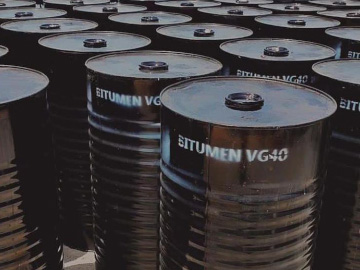
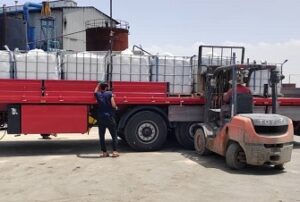
Depending on the destination and project requirements, viscosity grade bitumen can be supplied in different packing formats, including bulk shipments, drums and jumbo bags.
NEXOIL provides flexible sourcing, packing and export solutions for international buyers, with supply operations across the UAE, Oman, Iraq and Turkey. Product specifications and required documentation can be coordinated according to the buyer’s technical requirements and destination-market regulations.
VG Bitumen Supplier & Exporter
NEXOIL supplies VG10, VG20, VG30 and VG40 bitumen to international markets, combining flexible sourcing with practical packing and export solutions.
For current availability, technical specifications, packing options and commercial quotations, contact NEXOIL’s sales team with your required grade, quantity, destination and specification.
Bitumen (VG10)
Bitumen VG10 is a particular type of viscosity-grade category, commonly used in road construction and various industrial applications. Derived from crude oil via fractional distillation, VG10 is a petroleum-based product. Its relatively low viscosity makes it ideal for use in road construction, especially in colder regions.
VG10, as the softest kind of VG class, is mainly suitable for surface coating or paving in cold climates. Moreover, it is used in the production of emulsions and modified bitumen. its equivalent grade in PEN grade is 80-100. It is commonly utilized for surface dressing in paving and repair works, particularly in cold climates, as an alternative to the 80/100 penetration grade bitumen. VG10 leads to more durable pavements by optimizing mixing and compaction temperatures. Unlike penetration bitumen, VG 10 shows consistent rutting performance in hot weather. The specified minimum kinematic viscosity at 135°C helps avoid tender mixes during construction.Additionally, it is used in the production of emulsions and modified products.
| Specification | Unit | Value | Test Method |
| Absolute Viscosity, at 60 ◦C | Poise | Min 800 | ASTM D4402 |
| Kinematic Viscosity, at 135 ◦C | CST | Min 250 | ASTM D2170 |
| Flash Point | ◦C | Min 220 | ASTM D93 |
| Solubility in Trichloroethylene | %WT | Min 99 | ASTM D2042 |
| Penetration Value, at 25 ◦C | 0.1mm | 80-100 | ASTM D5 |
| Softening Point | ◦C | Min 40 | ASTM D36 |
| Thin-Film Oven Test (TFOT) | |||
| Viscosity Ratio, at 60 ◦C | ◦C | Max 4 | ASTM D4402 |
| Ductility at 25 ◦C | Cm | Min 75 | ASTM D113 |
Bitumen (VG20)
This grade of viscosity grade bitumen, with 1600 to 2400 poise at 60 °C. is generally used in hot mix asphalt for road construction in cold or mountain areas.
In North India, Vg20 is used for road construction in hot mix asphalt.
Nexoil Ltd. guarantees the quality of Bitumen VG-20. An independent international inspection agency verifies both quality and quantity during vessel/container loading. Each production batch is tested by the Quality Control (QC) team to ensure compliance with ASTM specifications. We supply our customers with the material fully conforms to ASTM standards besides Spot Test Negative(AASHTO T102).
| Specification | Unit | Value | Test Method |
| Absolute Viscosity, at 60 ◦C | Poise | Min 1600 | ASTM D4402 |
| Kinematic Viscosity, at 135 ◦C | CST | Min 300 | ASTM D2170 |
| Flash Point | ◦C | Min 220 | ASTM D93 |
| Solubility in Trichloroethylene | %WT | Min 99 | ASTM D2042 |
| Penetration Value, at 25 ◦C | 0.1mm | 60-80 | ASTM D5 |
| Softening Point | ◦C | Min 40 | ASTM D36 |
| Thin-Film Oven Test (TFOT) | |||
| Viscosity Ratio, at 60 ◦C | ◦C | Max 4 | ASTM D4402 |
| Ductility at 25 ◦C | Cm | Min 50 | ASTM D113 |
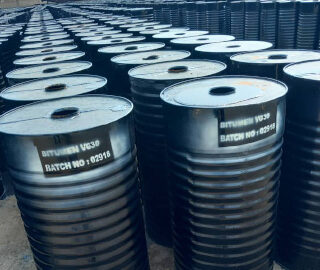
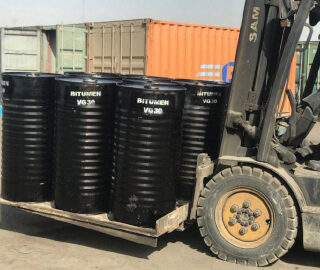
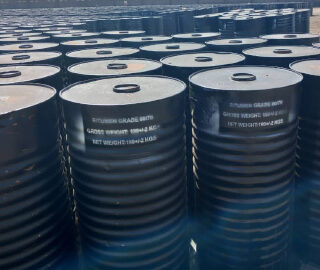
Bitumen (VG30)
Bitumen VG30 is a medium-viscosity binder formulated for use in pavement structures subjected to moderate to heavy traffic loads. Its Rheroological properties make it well-suited for flexible pavement layers, particularly in dense-graded hot mix asphalt applications for both base and surface courses. The binder’s viscosity is optimized to provide a balance between work-ability during mixing and placement, and mechanical stability against rutting and deformation under load.
VG-30 grade supports a range of asphalt compositions, including both dense-graded and open-graded systems, making it adaptable to multiple paving strategies. It is specified for use in high-volume roadways, urban pavements, structural waterproofing, and other infrastructure exposed to intermediate to heavy traffic conditions. Its cohesive strength and oxidative stability also make it effective for overlay and pavement rehabilitation works. This grade probably is the most applicable grade of bitumen in road construction, insulation, paving, & production of cutback and modified bitumen.
Vg30 is the best choice for heavy traffic, high loads, and hot or damp areas because its high viscosity leads to water and thermal resistance.
If you have any inquiries, please don’t hesitate to contact us.
| Specification | Unit | Value | Test Method |
| Absolute Viscosity, at 60 ◦C | Poise | Min 2400 | ASTM D4402 |
| Kinematic Viscosity, at 135 ◦C | CST | Min 350 | ASTM D2170 |
| Flash Point | ◦C | Min 220 | ASTM D93 |
| Solubility in Trichloroethylene | %WT | Min 99 | ASTM D2042 |
| Penetration Value, at 25 ◦C | 0.1mm | 50-70 | ASTM D5 |
| Softening Point | ◦C | Min 47 | ASTM D36 |
| Thin-Film Oven Test (TFOT) | |||
| Viscosity Ratio, at 60 ◦C | ◦C | Max 4 | ASTM D4402 |
| Ductility at 25 ◦C | Cm | Min 40 | ASTM D113 |
| Specific Gravity, at 25 ◦C | kg/m³ | Min 1.0131 | ASTM D36 |
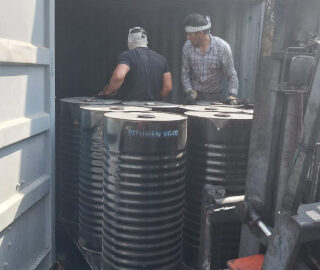
Bitumen (VG40)
This product is a high-viscosity material specifically formulated for applications involving extreme load-bearing and thermal conditions. It is typically employed in the construction of heavy-traffic pavements and critical stress zones. The increased viscosity of VG40 facilitates the development of rigid asphalt mixtures, thereby improving structural stability and resistance to deformation under high temperature and load, as per the specifications outlined below.
VG-40 bitumen is compatible with multiple asphalt mix types and paving techniques, producing cohesive, high-strength mixtures suited for all traffic intensities. It is recommended for heavy-traffic roads, maintenance layers, airport runways, taxiways, and container yards, particularly in regions with temperatures exceeding 40°C and in areas subjected to extreme load stress, such as junctions or structurally loaded sections.
With a viscosity of 3200-4800 Poise, Vg40 is actually the most widely used grade for high temperatures above 40 ◦C and super hard traffic such as conjunctions or segments in construction bearing heavy loads. Occasionally VG40 is the better alternative for 40-50 in penetration grade.


| Specification | Unit | Value | Test Method |
| Absolute Viscosity, at 60 ◦C | Poise | Min 3200 | ASTM D4402 |
| Kinematic Viscosity, at 135 ◦C | CST | Min 400 | ASTM D2170 |
| Flash Point | ◦C | Min 220 | ASTM D93 |
| Solubility in Trichloroethylene | %WT | Min 99 | ASTM D2042 |
| Penetration Value, at 25 ◦C | 0.1mm | 40-60 | ASTM D5 |
| Softening Point | ◦C | Min 25 | ASTM D36 |
| Thin-Film Oven Test (TFOT) | |||
| Viscosity Ratio, at 60 ◦C | ◦C | Max 4 | ASTM D4402 |
| Ductility at 25 ◦C | Cm | Min 25 | ASTM D113 |